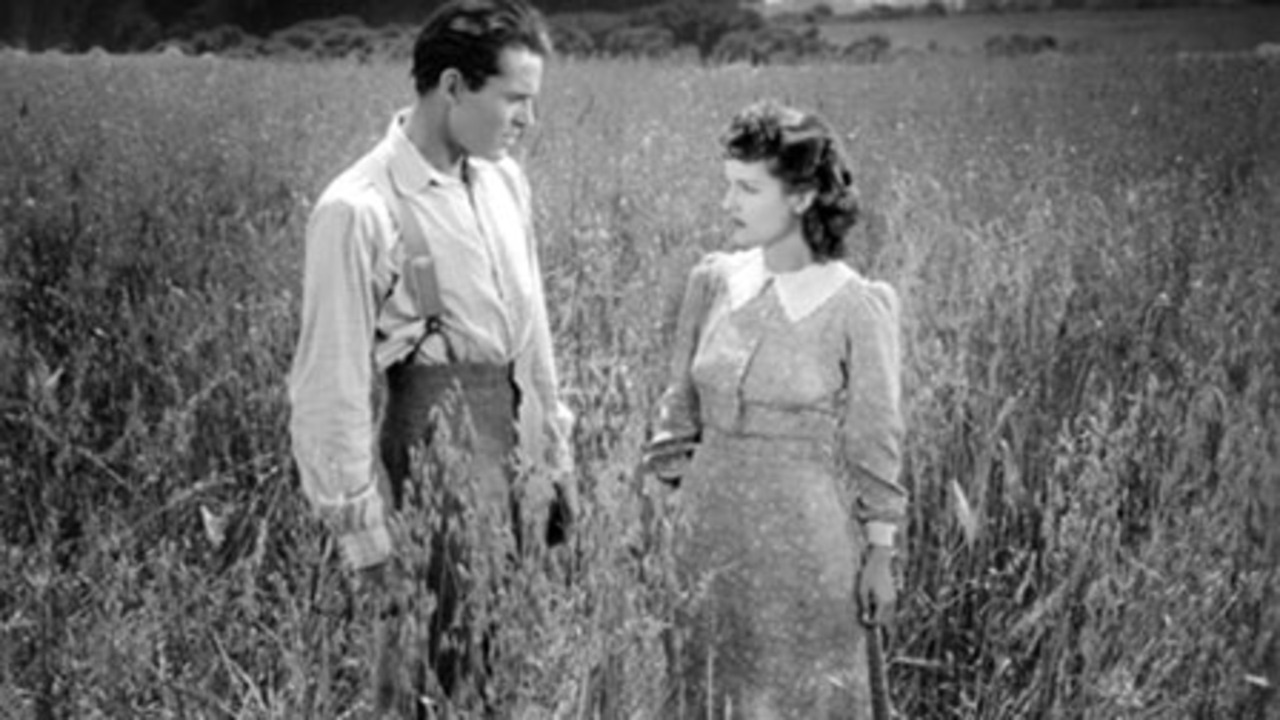
Showing posts with label authorship. Show all posts

Friday, 1 April 2022

John Sturges

As I have mentioned before, one of the first, or possibly the first, VHS tape I ever bought was Ice Station Zebra (1968), directed by John Sturges. I still have the tape, even though it has been at least 15 years since I had a VHS player. Sturges matters to me. While he was not as important as, for example, Alfred Hitchcock for my developing interest in films, he has always been a presence in a way no other filmmaker has been. I cannot explain this in any logical way, but I imagine it is related to the significant impact seeing some of his films had on me at a young, impressionable age. Besides Ice Station Zebra, there was also Kind Lady (1951), Jeopardy (1953), Gunfight at the O.K. Corral (1957), The Great Escape (1963), Hour of the Gun (1967), The Eagle Has Landed (1976). I watched them on TV whenever I had the chance, as I knew that if John Sturges were the director I would not be disappointed. Once I watched Joe Kidd (1972) with my grandmother, an unapologetic fan of Clint Eastwood, but she was sadly disappointed with that one.

The reason for why I am writing this now is that I have just read Dreams of Flight: The Great Escape In American Film and Culture, a new book by film scholar Dana Polan about the backstory, production, reception, and influence of The Great Escape, but it is also autobiographical; how Polan saw the film when he was a boy (at a drive-in), how it changed him, has followed him through his life, and how he felt compelled to write a book about it. Earlier this year I also read Sheila O'Malley's blog post, about Sturges, which also has that autobiographical aspect to it.

It is not just us. All through my childhood, my dad spoke about three films that had made an impact on him. The Ox-bow Incident (1943), The Magnificent Seven (1960), and The Man Who Shot Liberty Valance (1962). As you can see, they were all westerns and one of them was by Sturges, The Magnificent Seven. Even before I started to watch the films myself, I had already been introduced to one of them.

Alfonso Cuarón is another one for whom having watched a film by Sturges in their youth made a big impression. In his case it was Marooned (1969), which, not by chance, the characters in his autobiographical film Roma (2018) also go to the cinema to watch.

Paul Thomas Anderson has spoken of Sturges's Bad Day at Black Rock (1955), and the quality of Sturges's audio commentary to its Laserdisc release. What he said was "You can learn more from John Sturges’ audio track on the ‘Bad Day at Black Rock’ laserdisc than you can in 20 years of film school." (Confusingly there are several versions of this quote floating around on the internet, some inaccurate. What I just quoted is word for word what he said in an interview in the Los Angeles Times. You can listen to Sturges's commentary here.)

***

The earliest of Sturges's films that I have seen is from 1949, The Walking Hills, which is quite good. Next year's The Capture (1950) is very good. The People Against O'Hara (1951), with Spencer Tracy as a struggling attorney and John Alton as the cinematographer, is a fine drama. These were years in which Sturges could make 3 - 4 films a year, and several of the early films I have not seen, including interesting ones like Mystery Street (1950) and Right Cross (1950). But it seems his career settled on a more focused and deliberate trajectory in 1953, when he made the western Escape from Fort Bravo, with William Holden. Soon this became his defining kind of film, together with war movies, and I have seen almost every film he made after 1953. I would speculate that he was attracted to such films because they gave him plenty of opportunity to shoot widescreen films outdoors, and also to work with ensemble casts of men working together. He was also interested in history, not least American history. Some of the highlights are Bad Day at Black Rock, Backlash (1956), Gunfight at the O.K. Corral, The Law and Jake Wade (1958), The Magnificent Seven, The Great Escape, and Hour of the Gun. Another one I like a lot is A Girl Named Tamiko (1962), which is thematically unusual as it is a contemporary love story, focused on a man and a woman. (Gunfight at the O.K. Corral is also something of a love story, but between Wyatt Earp and Doc Holliday.)

***

There is not that much written about Sturges, but in the books and articles I have read it is often the case that the writer(s) discuss whether he can be considered an auteur or not, and there are often complaints about how Andrew Sarris was unfair to him. I find this tiresome. As I have written about earlier, I think we would be better off not using the term, or concept, of auteur as few seem to even know what it means. At least there is no consensus about what it means. (Which is true for many common terms used by film scholars and critics.) Sturges's films have a recognisable style across his oeuvre, and there are thematic consistencies as well as similarities regarding tone, style of acting, and pacing, and if you want to call him an auteur that is easy to justify. But what is gained by this? It has no bearing on the quality of the films. To get an example of this confusion, this is what Polan says in his book I mentioned above: "It is important, I think, not to turn Sturges into some sort of auteur imagined as working to express a deep metaphysics that somehow was engrained into these films made for the business of entertainment." (p. 79) No part of that sentence makes sense. Since Polan elsewhere in the books writes about the stylistic and thematic concepts he finds consistent throughout Sturges's body of work, his definition of what an auteur is must be different than how it is usually conceived. I do not know what he means by "a deep metaphysics" that is "engrained into" the films, or who has said that this is what it means to be an auteur. Or is Polan mocking people who make that argument? If so, who are these people he is mocking? And he seems to think that there is some contradiction between being an auteur and doing films "made for the business of entertainment." But if that is a contradiction, it is one that Polan himself has invented. Either way, arguing about whether Sturges is an auteur or not is pointless, since it has little to do with Sturges and primarily to do with what you mean with the word auteur, or what you think others mean by it.

The Law and Jake Wade

Joe Kidd

What is the style of Sturges? The images are clean, clear, spread out, uncluttered, spacious, whether indoors or outdoors. He is one of the great masters of the widescreen shot. Even in earlier films before the emergence of CinemaScope and other wide formats, such as The People Against O'Hara, he composed in width as well as depth; as if he spent those early years just waiting for a widescreen format to emerge. If I am not mistaken, all the films he made from 1953 have been in various widescreen formats, whether CinemaScope or Panavision or something else. His favoured way of filming has a stylised element to it, and it frequently involves a lack of people. The streets of his towns are usually empty, because that is how he wants his shots to be. When he made Bad Day at Black Rock, one demand he had was that he would not use any extras. The only people in the shots would be the characters who really had to be there. This makes the shots and street scenes unrealistic, but that is his way of filming, not just in Bad Day at Black Rock (below) but in general.

The streets are however crowded in The Hallelujah Trail (1965), but then that whole film is a crowded mess, a rare attempt by Sturges to be funny and boisterous. It is amiable but tiresome. But it is an exception. His characters otherwise seem to exist in isolation, and they are usually not just alone but lonely. This is a recurring thing in his films, loneliness. The most famous scenes from his films, such as Steve McQueen on a bike or in a cell (the cooler) in The Great Escape, are usually of people being alone and isolated. Consider a scene in the beginning of Sturges's penultimate film, McQ (1974). A cop in civilian clothes walks into a diner, uses the restroom to wash his hands, and then walks out to the counter and orders a glass of milk. He is the only customer in the place and the man who works there is primarily out of sight in the kitchen, so most of the sequence is just a lone man in a large diner having a glass of milk. It is true that several of his famous films are of a group of men working together, but they are still isolated, whether in jail, in space, or on a submarine, and their exchanges are rarely on a personal level. At the end of the film they will either have died alone or they will have split up. Companionship is not a lasting thing in Sturges's films. Has there ever been another American filmmaker for whom loneliness is such a central theme?

The outdoors are overwhelming too, and the characters, or some small town or hamlet in which they live, are dwarfed by mountains, trees, and the sky. Sturges likes to use a crane, and to move the camera both sideways and up and down, to make the shots fluid and to capture the vastness of nature. But action scenes, like fights or shootouts, are carefully choreographed and often done in a brief outburst, filmed with a fixed camera. He liked to prepare his shot in advance, doing diagrams and calculating angles. He had an engineer's interest in such things, and cutting was an important part of it too. (One person he worked most often with was the editor Ferris Webster, who cut some 15 of Sturges's films.) Hour of the Gun is his most extreme film in terms of style, so stylised that it reaches some kind of poetic abstraction, where everything not essential has been stripped away. The same is true for The Satan Bug (1965). I would say that these two films are his most abstract in style, but The Satan Bug is unfortunately not a good film, as the story is too ridiculous and incoherent. But through its spare, bare style, which includes the acting, it becomes a fascinating exercise just the same, more like a blueprint of a film than an actual film.

The world depicted in his films is a rough and hostile place, which Sturges's depicts without almost any traces of sentimentality. If you focus on what matters you might make it, and even if you do not make it, you might still have recovered your self-respect and die as a proud man, knowing you did the best you could. That is one reason some of his films are something of an emotional paradox, they are tragedies yet they can be simultaneously uplifting. But usually, they are more sad than uplifting. Some, like Last Train from Gun Hill (1959), end in darkness. Many of the films also end with the question "Was whatever was done worth all the pain it caused?" Sometimes a character explicitly asks it, sometimes it is unspoken, but the question is almost always there.

 
Hour of the Gun

One filmmaker I think would make for an interesting compare/contrast is Anthony Mann. They have for one thing a similar career trajectory: both started doing B-movies in the 1940s, then noirs with cinematographer John Alton, and then primarily making westerns and war films with bigger budgets and stars. They are downbeat, they do not do comedies or musicals, and rarely domestic films, and their westerns are psychological, focused on characters in turmoil or bent on revenge. There are also visual similarities, and they are excellent at staging fight sequences. But Mann is by far the greater director. There are more depth and complexities in his films, and in the performances he gets, and the visual style is more inventive and striking, especially when indoors. But I would have to spend more time with their films simultaneously to strengthen my argument. For now, I just add that two lesser-known westerns by Sturges, Backlash (written by Borden Chase who also worked with Mann on several occasions) and The Law and Jake Wade, are particularly close to Mann and they are among Sturges's best films. Yet they are not as good as Mann's best films. (Here is my earlier article about Mann.)

Speaking of compare and contrast, Sturges's By Love Possessed (1961), a for him uncharacteristic soap opera about love, family, and generational conflict, would make for an interesting triple feature with Henry King's This Earth is Mine (1959) and Douglas Sirk's Written on the Wind (1956). To add to the relevance of comparing them, they were all shot by Russell Metty. "I had no business making it." Sturges said.

***

In an early scene in The Magnificent Seven, Steve McQueen and Yul Brynner's characters Vin and Chris are talking. McQueen's Vin asks where Chris is heading. "I'm drifting south more or less." he says. "Where are you heading?" "Oh me, I'm just drifting." says Vin. That to me felt like a life-goal worth pursuing at the time, and when I went on my first trip around the world, in 2001, I had calling cards made out on which I had printed my name, email address, and as my profession "Drifter". Such is the influence of Sturges on me. Alas, the days of drifting around the world seem to be over. Maybe when I retire... Until then I at least have Sturges's films for strength and company, even if they rarely provide much comfort.
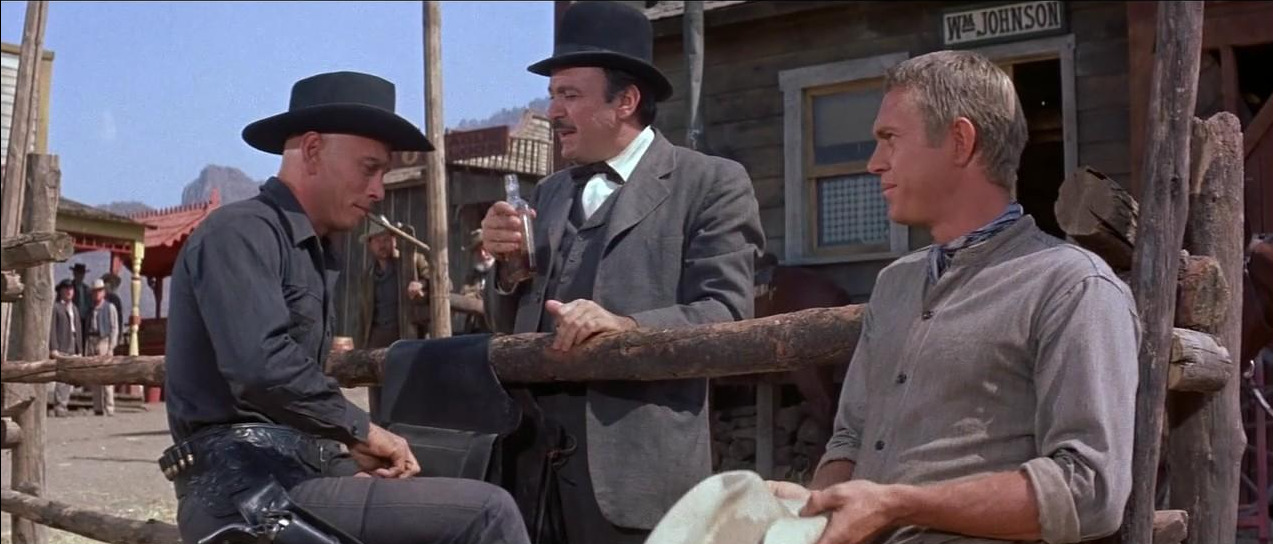
The Magnificent Seven
 

----------------------------------

Some selected readings:

Books:

Lovell, Glenn, Escape Artist - The Life and Films of John Sturges (2008)

Polan, Dana, Dreams of Flight: The Great Escape In American Film and Culture (2021)

Reframing Cult Westerns: From The Magnificent Seven to the Hateful Eight, editor Lee Broughton (2020)

Articles:

Bengtsson, Åke, "John Sturges" (1962) in Chaplin

O'Malley, Sheila, "'I think I'm a pretty good storyteller.' - John Sturges" (2020) in http://www.sheilaomalley.com/?p=164847

Me about Anthony Mann: https://fredrikonfilm.blogspot.com/2018/01/anthony-mann.html 

Friday, 26 February 2021

New Hollywood and the box office Part II

The previous post, where I wrote about "New Hollywood" and some conventional wisdoms surrounding it, has generated an unusually large number of comments and agreements/disagreements, and misunderstandings. It seems appropriate to follow it up with another piece with clarifications and elaborations, and a couple of responses to some of the comments I have received. For that reason, this post is one week earlier than usual, and will primarily be of interest to those who have read the first article. [Part III is also available now here.]

The first thing I want to clarify, as some have misunderstood this, is that I am not suggesting that the critics/scholars I am talking about are saying that audiences wanted one thing when in reality they wanted another thing. My point is that there were large audiences for different kinds of films, including expensive musicals, as well as cheaper "counter-cultural" films (whatever a "counter-cultural" film is), but too much of the critical and scholarly writings about it have been focusing on the latter films, and arguing that it was primarily this that audiences wanted, all evidence the contrary. Neither am I claiming that nobody has questioned that conventional wisdom before, because some scholars have, such as Steve Neale. But Neale and a few others have unfortunately not had as big an impact on the conversation around "New Hollywood" as for example Biskind's Easy Riders, Raging Bulls and other books and articles with a similar story to tell. Biskind’s unearned reputation shows itself in how often he is generously quoted in even some of the better books on the subject.

One reaction I have had is "I did not know this!" and another has been "Well, does not everybody know this by now?" and while the first response negates the second response, it is worth pointing out that one of the challenges with writing about such a topic is to figure out how widespread the tendency that you describe is. I think it is fair to say that what I have described is the most prevalent view among scholars, critics, students, and among film enthusiasts in general. Only the few who have explicitly researched the films and era of New Hollywood with a critical eye take a different view, and even among them some inaccurate claims, such as about the release of Jaws and about the history of blockbusters, usually remain unchallenged. There is also, persistently, a confusion as to whether "New Hollywood" refers to a period in time, and if so, which time, or to a group of films. If it is a group of films that share certain characteristics, then it cannot be boxed in by arbitrary years but must always be true for films with these characteristics, regardless of when the films were made. It is the same problem that we have with film noir. If film noir refers to a certain kind of film with certain characteristics, you cannot say that the first one appeared in 1941 and the last in 1958 (as is often claimed) because films with such characteristics have been made before and after those arbitrary years, unless it was technologically impossible to do so, and it was not.

***

Something I did not mention in the previous post was that despite the undeniable successes of The Graduate (1967) and Easy Rider (1969), it did not follow that such films replaced the roadshow musicals, despite what many scholars and critics seem to be saying. There were films, made on the back of Easy Rider and The Graduate, that were aimed for an audience who supposedly wanted edgy, counter-culture stuff about the young ones, people such as themselves, but they did not make much of a mark. According to Variety in 1971, the studios were despairing because most of their youth-films flopped. The title of one article sums it up, "Youth Shuns Youth-Lure Films." The year before, an article titled "Youth Lure Alone Not Enuf" said: ”Through [sic] all this would seem to indicate that the “Easy Rider Syndrome” has been put to rest already, [producer Irwin] Winkler indicates one part of it is stronger than ever – the attempt to trim budgets."

It is not easy to specify what an edgy, youth-oriented film is, but we could perhaps include Goodbye, Columbus (1969) as one of the few that was a hit after The Graduate. Love Story (1970) was for example a huge success, and youth-oriented, but hardly edgy, however you define that term.

Ali MacGraw in Goodbye, Columbus

Instead, the musicals were replaced by disaster movies. By this I mean that whereas in the 1960s, musicals had dominated at the box office, in the early 1970s it was instead the disaster films. 1974 was their peak year, when three of them, The Towering Inferno (1974), Earthquake (1974), and Airport 1975 (1974), were among the top ten films in the United States. In the second half of the decade they began to fizzle out, and titles such as The Swarm (1978), Avalanche (1978), Meteor (1979), or Hurricane (1979) came and went almost without a trace. This is a reminder of something else: it is often the case, throughout film history, and not just in Hollywood, that a film will appear and become a huge unexpected success, and then others try to replicate that success with increasingly diminishing returns. This is almost a law of the business and therefore not especially interesting to analyse.

But it was not only disaster films that were popular in the early 1970s, they were competing with other kinds of films such as the live-action Disney films or films like Summer of '42 and Carnal Knowledge to mention two equally popular, but very different, films from 1971. That is one of my key points: it was a diverse selection of films that were popular, and choosing one and proclaim that "This is the one that captures the zeitgeist!" will not wash.

***

Something that is often said about the period, whether called "New Hollywood" or "Hollywood Renaissance," is that it was auteur-driven, unlike the earlier days in Hollywood. If you make that argument you need to explain how it was more auteur-driven than, say, when John Ford made films produced by his own company Argosy Pictures, or when Preminger and Hitchcock became the producers of their own films, or Howard Hawks, or any other of the many directors who either worked freelance, was his own producer, or had his own production company. Mostly it was a he, but Ida Lupino was also one of them. It is not enough to just say that once it was all run by the studios and now individual creative agency was possible, because that is not an accurate description of how things worked, either before 1967 or after. (As I have written earlier, I think the word "auteur" is usually used in a way that is confusing and a-historical, and should preferably be retired.)

***

To continue the discussion of Jaws, the most recent edition of The Film Experience, one of the most widely used introductory textbooks for film students, says that it was "the first film to be released simultaneously on hundreds of screens and promoted though [sic] national television advertising" (p. 75) but as I said in the earlier piece, this is not correct. Some who have responded to my piece have been reluctant to accept this, which I can understand as it has been treated as a truth for decades. But I wonder where this belief comes from, and why it has been so entrenched, despite being relatively easy to disprove. To repeat two counter-examples, among several others, the James Bond films Live and Let Die (1973) and The Man With the Golden Gun (1974) were each released simultaneously in around 600 prints, and were advertised on TV. You can click on this link for a TV ad for Live and Let Die and here for The Man With the Golden Gun.

The negligent treatment of James Bond within film history is an issue in its own right. If you are working on, writing about, a history of blockbusters, marketing strategies, merchandise, franchises, tie-ins, and similar things, you should also include the Bond films. The Bond phenomenon was not just about the films, it was a whole culture around it with toys, clothes, games, replicas of gadgets, and so on. The films were not Hollywood productions, so maybe that is part of the reason why insufficient attention has been paid to them, and their release campaigns, but they were not disconnected from Hollywood either, and United Artists were handling the American campaigns. Including them in a discussion about "New Hollywood" is relevant, not least Live and Let Die as it is so clearly influenced by blaxploitation and partly takes place in a less than glamorous New York. ("White face in Harlem. Good thinkin' Bond. Let's get outta here." is the sigh of the black CIA agent Strutter, after rescuing Bond from a tight spot.)

***

There are several things that lie at the heart of the problems I wanted to address in my initial post, and they have to do with how research is being done; the art, craft, and ethics about researching and writing about film history. But since that is not specifically related to New Hollywood, it is something I better return to in a different post. The difficulties with dealing with box office statistics is another topic that should also be addressed.

Yet another topic to pursue is that of directors from the older Hollywood, and how they managed the new business arrangements and more liberal censorship rules. They are often said to have failed, artistically as well as commercially, in this period but that is to simplify things. John Huston for example was successful, and Billy Wilder was making some of his best films. Henry Hathaway made one of his most successful and beloved films in 1968, True Grit. Another interesting case study is Don Siegel, who, while having made fine films in the 1940s and 1950s, seems to have found an additional gear for his career and creativity in the late 1960s and 1970s. But it is a complex story.

***

One scholar who replied to me, Peter Labuza, thought I could have mentioned some of the more recent research that, like me, has questioned the conventional wisdoms. While I thought about doing so for the initial post I finally decided not to, as I wanted to emphasise that conventional wisdom. I only recommended one book: Epics, Spectacles, and Blockbusters by Steve Neale and Sheldon Hall. But with my initial point made, I can now recommend more books. An earlier piece by Neale, "'The Last Good Time We Ever Had?' Revisiting The Hollywood Renaissance," makes many of the same points I have been making, and it was published in Contemporary American Cinema from 2006. I can also recommend an article by Lawrence Webb from 2015, "New Hollywood in the Rust Belt: Urban Decline and Downtown Renaissance in The King of Marvin Gardens and Rocky," published in Cinema Journal. A good, recent, book is Hollywood and the Baby Boom: A Social History (2018) by James Russell and Jim Whalley. Of interest is also Nicholas Godfrey's The Limits of Auteurism: Case Studies in the Critically Constructed New Hollywood (2018). 

But, as always when doing film history, the most important thing is to watch the films.

--------------------------

Bibliography:

Easy Riders, Raging Bulls (1998) by Peter Biskind. 

Epics, Spectacles, and Blockbusters (2010) by Steve Neale and Sheldon Hall.

Hollywood and the Baby Boom: A Social History (2018) by James Russell and Jim Whalley.

"New Hollywood in the Rust Belt: Urban Decline and Downtown Renaissance in The King of Marvin Gardens and Rocky" by Lawrence Webb, published in Cinema Journal, (Vol. 54, Issue 4, 2015).

The Film Experience (5th edition 2018) by Timothy Corrigan and Patricia White.

"'The Last Good Time We Ever Had?' Revisiting The Hollywood Renaissance" by Steve Neale, published in Contemporary American Cinema (2006).

The Limits of Auteurism: Case Studies in the Critically Constructed New Hollywood (2018) by Nicholas Godfrey.

“Youth Lure Alone Not Enuf” Variety (November 4, 1970)

"Youth Shuns Youth-Lure Films" Variety (November 3, 1971)

My previous post: https://fredrikonfilm.blogspot.com/2021/02/1970s-and-economics.html

My piece about the usages of the term "auteur": https://fredrikonfilm.blogspot.com/2020/11/discarding-term.html 

Added 2021-03-07: Part three is now available: https://fredrikonfilm.blogspot.com/2021/03/new-hollywood-and-box-office-part-iii.html

Friday, 13 November 2020

Discarding a term

At work the other day I read a new book, Postfeminist Whiteness - Problematising Melancholic Burden in Contemporary Hollywood by Kendra Marston, and it reminded me of a common but odd phenomenon within film studies. The last chapter was about Sofia Coppola, and the chapter began with an overview of the history of the "auteur" for a couple of pages, mentioning all the usual suspects from Truffaut and Barthes to Sarris and Kael. How come people still feel the need to do this? Everybody in the field knows this story. If Marston felt a need to call Coppola an auteur she could just do it, there is no need to explain the term, provide its history, and mention the criticism that has been made against it. No other term of this kind is treated in this way. (Imagine if each use of the term "genre" was accompanied with a long review of what has been said for and against it, beginning with Aristotle.)

Another peculiar thing about the term is that many books/articles about this or that director often begins with the writer dismissing the concept of the auteur, and enthusiastically claiming that "we know from the writings of Roland Barthes that the idea of an author should be buried" or something similar, yet the rest of the book/article is the conventional kind of auteur study that you would think, given what they wrote in the introduction, they do not believe is valid or relevant.

I think the reason for this is that they are scared of being seen as old-fashioned, with "romantic ideas of authorship," so they want to pretend that they are not like that, that they are wise and knowledgeable. But it is untenable, as all efforts to eat your cake and have it are. If you do not believe in authorships and oeuvres, you should not write a book or article about the style, themes and concerns about a certain filmmaker, discussing their career as a whole. But if you want to do that, you need to accept the fact that this is what you do, and not hedge your writings by showing you have heard of Barthes and Foucault. (That a short, provocative text for a conceptual multimedia art magazine (Aspen), which is what Barthes's "The Death of the Author" initially was, and which he would quickly move away from in different ways, still seems to be regarded as containing some essential truths about art and writers, which we must always refer to, is quite absurd.)

It is all so pointless though. It is not romantic and starry-eyed to believe that human beings have personal agency and ideas, thoughts and visions, and that, when they make an artwork, these ideas, thoughts and visions can be expressed in that artwork. That is just common sense, and all this hedging and throat clearing is tiresome and annoying, a sign of insecurities. None of it would be needed if the word auteur was just dropped. This is what I mean by the title of this post, "Discarding a term".

It is also common that you will read sentences like "Federico Fellini was an auteur in the true sense of the word, he wrote and directed his own films and had complete control over them." But this is not the true sense of the word auteur. Many directors, such as John Ford, Vincente Minnelli, Ernst Lubitsch, Howard Hawks and Alfred Hitchcock (to name just five), do not write all of their scripts, yet are usually considered auteurs in the 1950s sense, which logically should be regarded as the "true sense". And it is almost impossible for any individual to have "complete control" over a film. Sufficient control is enough. Another issue is that people today often claim that auteur films are the opposite of genre films, even though the French critics of the 1950s, as well as Andrew Sarris, emphasised that many of those they considered auteurs worked within traditional genres.

These are examples of the fact that few know exactly what the term means, even though they know its conventional history. And this is another reason why we are better off giving up on using it. I do not think it serves a purpose.

For the first, say, 60 years of filmmaking the word auteur was not in use, yet the common view of films and filmmaking was not that different from what it is now. Films were advertised with their stars, and/or directors, and/or studios, critics wrote about the styles and themes of directors, and in general it was the director who was considered the most prominent person in the filmmaking process (with plenty of variations and nuances, just like today). It is a mistake to think that the views of directors changed in the 1950s. In this regard, the conventional history is a distortion.

When I began writing my PhD thesis ten years ago I wrestled with this. How should I approach Hasse Ekman? Should I do the historical overview of views on authorship? Should I call him an auteur? I did not think calling him an auteur was particularly meaningful as most directors can be called that, and since Ekman often directed, wrote, produced, and also played the lead, it was self-evident that he too would be. I tried to give it some more nuance by distinguishing between "internal" and "external" auteurs, with internals being filmmakers, like him, whose presence are embodied in their films because they are being autobiographical or because they appear in them. Other directors with no such presence would be external auteurs. But this was already a fuzzy distinction when I came up with it, and not one I have pursued. I did do a historical overview, but not the conventional one, as in Postfeminist Whiteness, but one that showed how the director traditionally, or at least since the 1910s, has usually been regarded in much the same way as today.

Given how the term, whenever I come across it, is either unnecessary or presented in an ahistorical way, I have become more and more alienated from it. It has been a long time since I referred to a director as an auteur. There is no need. Calling a director a director is enough, regardless of whether they write their scripts or not. Critics and others were doing fine in earlier decades without using the term auteur, and so would we today. But if you do feel compelled to call somebody an auteur, just do it, and do not spend pages of contextualisation and disclaimers.


---------------------------------------

For an earlier piece by me about auteurs and academia, you can read this: https://fredrikonfilm.blogspot.com/2018/09/abstract-and-tactile.html

This article about Andrew Sarris is also related: https://fredrikonfilm.blogspot.com/2020/05/andrew-sarris-and-american-cinema.html

Although I singled out Postfeminist Whiteness, this has nothing to do with this particular book, it was just a new example among hundreds of others. I think it is quite possible that it was not Marston but an overzealous supervisor or editor who demanded that historical overview.

Friday, 7 August 2020

The Intern (2015)

One of my favourite films of the last 10 years is The Intern (Nancy Meyers 2015). It is a film that gives me great pleasure, and that I find very moving. Nancy Meyers is to many something of a joke (and when praised, it is frequently for the spacious and luxurious apartments in her films) but I have seen all her films and I like them all, although I do not remember much of The Parent Trap (1998), which I have never re-watched. But The Intern is different, and much better than the others. There are several reasons for this, but let me first marvel at how unhip it is. There is no sex, no violence, no slapstick, no cynicism, no shock-value, no drama, no sign-posting of "important message". It is just a confident piece of mature filmmaking, made with love and tenderness. 

The story is that Ben Whittaker, a 70-something man, retired and a widower, finds it difficult to find meaning in his life, and when he sees an ad for a company seeking senior citizen interns, he applies, and he gets the position. The company is a new upstart that sells clothes online. It was started by Jules Ostin, a woman in her 30s, and she remains the boss. But the stress and strain of the work means she is on the edge of hitting the wall, and her marriage and family life are suffering. She has trouble sleeping and she does not eat enough. The dichotomy is clear. He is an old man, patient, calm, quiet, with set routines and very little to do; she is a young-ish woman, impatient, stressed, all over the place and with too much to do. They are played to perfection by Robert De Niro and Anne Hathaway.

That is the first reason for why I like the film so much, the acting. Delicate, nuanced, genuine, and perfectly believable. Hathaway is not unknown to play such a character, but to see De Niro is such a part, as a calm, stable, serious, genuinely good, non-threatening, person, is unusual. (I am not saying he never has played such a part, only that it is not a typical role.) 

Another reason is how good the film looks; it positively glows. The cinematographer is Stephen Goldblatt, an old hand at this. He has previously worked with Francis Ford Coppola, Tony Scott, Joel Schumacher and Mike Nichols, so this is comparatively mundane, stylistically, but he makes every space shine, to look warm and comforting, which is a central part of Meyers's general style. Feng shui cinema.

That was the craft of the film. But I also like what it is about and how it deals with the issues it has set up. 

Ben (De Niro) is old-school and out of date, he is celebrated but as something from the past, whereas Jules (Hathaway) is the present. Ben becomes a hero for the young people at the office, a mentor and father-figure. With his professionalism and unassuming manner, he brings stability and organisation to the company. But he could not run it as he is like a stranger in the modern world, unfamiliar with the internet and with computers. It is Jules's company, and it is her world now. But the argument in the film is that we need both past and present in order to make for a better future. Ben can be a celebrated and important person, even though he firmly remains of the past, and has to give way to younger generations, and part of the reason why he is heroic is precisely because he willingly gives way. He does not try to impose himself, and he does not feel any kind of resentment to being replaced by the young ones, or women.

This passing of the torch is underlined in one of the best scenes of the film, one of its most moving moments. Ben and Jules are working late, and she asks where he worked before he retired. He tells about his job, and eventually it becomes clear that the office he used to work in was located in the same building in which they are now. His former company made telephone books, and had the whole building. But telephone books are no longer needed, so the company is gone, and Jules's online shop has taken over the building. He then points to a spot in the building and he says that that is where his desk used to be, by the window. It is an understated, beautiful scene, which always makes me cry, and which also encapsulates a key theme in the film. Change is inevitable, time moves on, and we need to change and adapt with it.


One interesting aspect of the film is its lack of closure. The main conflict and arc in the film is whether Jules should let go of her role as the boss of her company, and hire a CEO. As mentioned above, she works too much and the stress is palpable. Yet she is reluctant to let someone else come in and take over. In the end, partly thanks to Ben's support, she decides against it and will carry on herself, like before. But this means that she is back where she was when the film began. The workload and strain remain the same. She has neither gained nor lost anything by the end of the film, regarding work. Ben on the other hand has gained a lot. New friends, a new purpose, and a new love interest (played by Rene Russo). But Jules wants to take that gamble. She made this company, and she needs to stay with it. What she has to do is to manage her time better, and delegate more. There is no clear suggestion in the end of the film that she will do so, but since she leaves the office in the last scene, and joins Ben in his tai chi class, it might be assumed that she will at least make an effort to calm down.

Meyers's other films are romantic comedies but this is not that. Instead it is a drama, and instead being about romantic couples, it is about a friendship across generations, moving and beautiful. Films about two people becoming friends are in general a rare thing, which is a shame, but The Intern shows how to do it. It is a meeting between two people who, even though they did not know it, needed each other, and who build their friendship out of a deep respect for the other person. This is a special kind of love. I mentioned above one specific scene that was the peak of the theme of time passing, and one generation taking over from another. There is also a scene that is the peak of their friendship, and that is when they go to San Francisco for a business meeting, and during the night they have a talk about their lives. She says that her one big fear in life is to die alone, and not being buried with someone else, and he says that she can be buried in the same grave as he and his wife. The wife is already there, but there is plenty of room. That scene too always makes me cry.

***

I love The Intern, as might be clear already, but it has some weaknesses. I let Manohla Dargis point them out:
The table [a place in the office which is messy and disorganised] is a silly, lazy screenwriting contrivance, and it says more about Ms. Meyers’s conflicted ideas about powerful women than it conveys anything interesting about Jules. A successful Hollywood director like Ms. Meyers, for starters, would never have gotten this far and with a number of hits to her name if she had been afraid of telling other people what to do. But Ms. Meyers has some distinct ideas about women, work and power, and so she piles on the issues: Jules is chronically late to meetings, among other sins, although that seems to be because she likes riding slowly through the office on her bicycle. The bike suggests that she’s a nonconformist, although the neat rows of her pretty, young, overwhelmingly white employees doing something in front of their computers suggest otherwise.
There are some other things in the writing that are questionable too (such as the character Becky, Jules's assistant), but these things do not matter all that much to me. 

The dominating kind of film of the last decade or so has been superhero films, which purports to be about heroism, leadership, and sacrifice. But none of them can compete with the quiet heroism and genuine leadership that is celebrated in The Intern; a hymn to ordinariness and basic human decency and kindness.

Friday, 24 July 2020

Russell Rouse and Clarence Greene

Russell Rouse has not got a lot of films to his name, and he has never been a known name or somebody who is talked about today. This a shame, because in the 1950s he did great work. He often worked with Clarence Greene; they first wrote D.O.A. (Rudolph Maté 1950) together, a film about a man who discovers that he has been poisoned and spends the last days of his life searching for his own killer. Then Rouse began directing, while they continued to write together, and Greene producing. The films they made in the 1950s, with one exception, are bleak, distinct films with an emphasis of filming on location, with a clear ambition to play around with conventions, to experiment, and to do the opposite of the expected. They were not attached to any one studio, and moved back and forth between expensive films with big stars and cheap films without any stars. While I am not able to say much about them, or the backstories to their films, I want to say something about the films.

The Well (Leo Popkin & Russell Rouse 1951) A girl is missing in a small town, and the police quickly apprehend a suspect. As the girl is black and the suspect a white man, gossip spreads and tension builds. Only the audience knows the girl has fallen down a well, and with the town consumed by fighting and riots, nobody is out looking for her. It is a powerful, moving drama, which benefits from the fine location work. Its handling of race relations, and its portrayal of the racial animosity in the town, is overall remarkably well handled. It is one of the best on that subject that I have seen from this time. (The film was inspired by the real case of Kathy Fiscus, a three-year old girl who fell down a well in California in 1949, and the rescue efforts were broadcast live on TV and radio.)


The Thief (1952) is an experimental spy thriller (without any spoken words) with Ray Milland as the spy stealing American nuclear secrets, while approaching a mental breakdown. Excellent location work, including a murder at the top of the Empire State building. The complete lack of dialogue is not exactly to the film's advantage, but it is an interesting experiment.


Wicked Woman (1953) is a low-budget drama about a tall blond woman coming to a new town, finding dodgy lodgings and a job in a cheap bar. Trouble is inevitable. The film is cheap and short, but full of life, quirkiness, confident camerawork, and intimacy. (Might be the only black and white film I have seen with a leg-shaving scene.) Other than a sleazy man living across the hall from the heroine, the film is rather non-judgemental towards its characters. Beverly Michaels plays the lead, an imposing presence. It is remarkable how good the film is considering its lack of a proper budget.


New York Confidential (1955) is by far the best of the films by Rouse that I have seen. It is even one of the best gangster films I have ever seen. Engaging, unpredictable, elegant, emotional, and dark. Great cast too with Broderick Crawford, Richard Conte and Anne Bancroft in the lead. One of the strengths of it is that the organisation (or "the syndicate") has a life of its own, and nothing must interfere with it, so any character is completely dispensable, in order to protect the syndicate's own interests. The gunmen and the hoodlums are interchangeable, as well as the top bosses, and nobody has any chance of breaking free, or standing up to the organisation. If you show any sign of disloyalty, or is registered as a threat of any kind, you will be killed in your home, or in your hotel room, or a dark back alley, and it might be a close friend who does it, because they too will be loyal only to the organisation. The only character that seems to be above it all is somebody named Albert. He is never seen or heard, and he is apparently in Sicily, but whenever there is a problem, the bosses call him up. It is an intriguing idea, that underlines the facelessness of organised crime.


Glenn Ford is the best aspect of The Fastest Gun Alive (1956). He plays a character in a constant state of soft-spoken nervous tension, the face usually sweaty, on the brink of collapse. The film is like a mixture of The Gunfighter (Henry King 1950), High Noon (Fred Zinnemann 1952), and with some Delmer Daves ambiance thrown in for good measure. But it also has its own twists and turns, and with some idiosyncratic angles and frames. There is also a spectacular dance sequence, which is completely superfluous to the story, but a joy to watch.


House of Numbers (1957) is weaker. Jack Palance plays two parts, two brothers, one in prison and the other outside, working together on an escape plan. Barbara Lang plays the wife of the imprisoned brother, who is working with the other brother to free the prisoner. It is a lesser work, still fine, but too convoluted. It being shot on location in San Quentin helps a lot.


The last film Rouse made in the 50s is also the weakest of them: Thunder in the Sun (1959). It is about a group of French Basques who have crossed the Atlantic and now have formed a wagon train to cross the North American continent. The film fails on most levels, and I am not convinced that the Basques would be flattered by how they are portrayed. The acting is below average, there are too many clichés, the music is wrong and the pacing is forced. The film feels phoney. Of note though is a fight sequence in the mountains in the end, between the Basques and some Apaches, which has superb stunts and is a lot bloodier than what you usually see in 1950s cinema. The moral growth throughout the film of the male lead, played by Jeff Chandler, from arrogant, misogynist drunk to a humbled, thoughtful man, is another redeeming feature.

***

Those are the seven films I have seen out of the 10 that Rouse directed. With the exception of Thunder in the Sun, they are all good, interesting, and with a personal touch. Some are great. He is much too good to be completely forgotten, and should be a lot more known, and cinematheques should do retrospectives. He also deserves a book-length study. Until that happens, try to watch some of his films. At some point I will have to try to locate the three films he made in the 1960s, but you can start with his earlier work.

Friday, 29 May 2020

Andrew Sarris and The American Cinema

Yet, anyone who loves the cinema must be moved by Daughter of Dr. Jekyll, a film with a scenario so atrocious that it takes forty minutes to establish that the daughter of Dr. Jekyll is indeed the daughter of Dr. Jekyll. (p. 143)
Andrew Sarris's book The American Cinema: Directors and Directions 1929-1968 is among the most influential and popular books within cinema studies and among cinephiles the world over. It is often said to be the birth place of the "auteur theory" (allegedly taking the critical writings in France, especially in Cahiers du Cinéma, and condensing their ideas into a theory), and it has been a central part in many people's cinematic lives; being used as a guide book to American cinema and what to look for in that rich cinematic history. It is also a book that has been criticised or ridiculed by film scholars who find the idea of authors and auteurs misguided, or romantic, or ideologically suspicious. Feminists have also criticised it for its lack of women filmmakers.

But like many books and articles of such influence, it has also taken on a life of its own, an almost mythical position, and, like Laura Mulvey once said about her own article "Visual Pleasure and Narrative Cinema": "it has acquired a balloon-like, free-floating quality." Both its friends and foes often seem to not necessarily pay that much attention to what Sarris is actually saying. They are talking about their ideas of the book, rather than the actual book. I have written before about how off-putting it can be when people base their judgement about films and directors entirely upon what Sarris has said about them, or what they think Sarris has said about them. He is one of those people whose followers do not always do him justice.

But while it is wrong to dismiss The American Cinema as some kind of romantic love song to towering geniuses (Sarris is appropriately aware of the constraints of filmmaking and its collaboratory nature), the book has its flaws and weaknesses. It is also a book of infectious enthusiasm and passion, and there are many wonderful sentences and insightful observations in each part of the book.

***

Films are not made by single individuals alone, they are made by a group of collaborators. But these collaborators do not all have the same impact on the film, and most are only concerned with a specific aspect of the film. It is usually only the director, whether or not she has a screenwriting credit, who has all aspect of the film as her responsibility. This is not a theory but a known, empirical fact about how films are made, and those who have written about films, at least from the 1910s, have as a rule taken this position. The great British critic Dilys Powell mused about the national, industrial and cooperative aspects of cinema in an article in 1946, and then asked the rhetorical question: “How can one man leave the mark of his personality and his talent on this hugger-mugger?” which she answered with “But he does.” This is the same question and answer Sarris gives, and he is also trying to provide an explanation as to how.

Raoul Walsh and Ernst Lubitsch

His definition of what he means by "auteur theory" is this: "The auteur critic is obsessed with the wholeness of art and the artist. He looks at a film as a whole, a director as a whole. The parts, however entertaining individually, most cohere meaningfully. This meaningful coherence is more likely when the director dominates the proceedings with skill and purpose." (p. 30) He then discusses various constraints, including studios and producers, and says "The strong director imposes his own personality on a film; a weak director allows the personalities of others to run rampant. But a movie is a movie, and if by chance Robert Z. Leonard should reign over a respectable production like Pride and Prejudice [1940], its merits are found elsewhere than in the director's personality, let us say in Jane Austen, Aldous Huxley, Laurence Olivier, Greer Garson, and a certain tradition of gentility at Metro-Goldwyn-Mayer." (p. 31)

I think it is unfortunate that he used the expression "auteur theory" in the book because there is no such thing, at least not as it is commonly understood. The idea that a director usually is the creative force behind a film is not a theory, any more than it would be a theory to say that Frida Kahlo or Hilma af Klint are the creative individuals behind their respective paintings, or that Anne Tyler is the author of Breathing Lessons. As there is no "painter theory" or "author theory," there is no "auteur theory." He does correct himself at one point by saying "the auteur theory is not so much a theory as an attitude" (p. 30) and on another page he says that it is "merely a system of tentative priorities" (p. 34) yet he continues to say "auteur theory."

Sometimes those who criticise him, or "auteur theory," will mention an important scriptwriter or cinematographer or editor and use their names as an argument for why Sarris is wrong. But he is not denying their presence or importance. Those who criticise him for romantic ideas about artistic geniuses should pause to consider that of all the directors he writes about in the book, few of them are said to be great, and even fewer geniuses. "Not all directors are auteurs. Indeed, most directors are virtually anonymous. Nor are all auteurs necessarily directors." (p. 37) He uses The Americanization of Emily (1964) as an example of a film in which the writer, Paddy Chayefsky, is more important than the director Arthur Hiller. Some of those who criticise Sarris claim that he ignores the production circumstances of filmmaking but he does not do that either, it is rather the opposite. It is precisely the modes of production, that others claim invalidate his arguments, that are the basis of his argument. He writes "The auteur theory derives its rationale from the fact that the cinema could not be a completely personal art under even the best of conditions. The purity of personal expression is a myth of the textbooks." (p. 32) and a little later: "To look at a film as the expression of a director's vision is not to credit the director with total creativity. All directors, and not just in Hollywood, are imprisoned by the conditions of their craft and their culture." (p. 36) Neither does he ignore filmmakers' weaknesses or how consistencies can be liabilities: "All that is meaningful is not necessarily successful. John Ford's sentimentality in The Informer [1935] is consistent with the personality he expresses throughout his career, but the film suffers from the sentimentality just the same." p. 35 He also mentions Hitchcock's Marnie (1964) and Hawks's Red Line 7000 (1965) as two other films that are clearly personal and consistent yet have, to him, obvious weaknesses.

Marnie

Almost all of what he has to say about auteurs and directors are widely accepted ideas and beliefs, and many of those who have criticise him probably feel the same way, unless they are of the belief that human agency and personal vision could never possibly appear in filmmaking. What he wants to do with the book is not to idealise directors or ignore the production circumstances. His main concern is to bring forward the riches of Hollywood cinema and say "Look, here are films and filmmakers as great as any from Europe or the rest of the world!" and the book is a polemic against a certain kind of criticism that sees American cinema as only mainstream trash, with a few serious-minded films. He makes an important distinction: everybody is a potential auteur, or is potentially great, and it is only after you have researched, investigated and analysed their work that you will be able to tell. "Welles is not superior to Zinnemann 'of course,' but only after an intensive analysis of all their respective films." (p. 32) That he himself is at times unable to live up to this ideal of "intensive analysis" is another matter.

He also criticises those who look at films only from the perspective of plot and story, and disregard the visual element. As a director will be explicitly concerned with the look of the film, its visual elements, even when somebody else wrote the script, it is only natural that directors are especially important to Sarris. There is nothing romantic or ideologically suspect about that, and there is nothing there that is revolutionary or remarkable, and no particular reason for anybody to get upset or provoked by it. Yet upset and provoked people were, and the kind of critics and scholars he was criticising are still prevalent today.

***

That was the first part of the book, the historical and theoretical groundwork. The next part, the largest part, are the brief entries about individual filmmakers. There is great writing in this section of the book, but here I will focus on what I think are its flaws, and the key weakness of the book: Sarris's judgements, ranking and his system of 11 different categories. The weakness is that they are often difficult to understand, and at times contradictory.

These are the categories:

Pantheon directors
The far side of paradise
Expressive esoterica
Fringe benefits
Less than meets the eye
Lightly likable
Strained seriousness
Oddities, one-shots, and newcomers
Subjects for further research
Make way for the clowns!
Miscellany

The first thing to note is that Fringe benefits consists of directors who are not Americans and have not made films in the United States, except one, René Clair. So why are they in this book? I have never understood it. If he felt compelled to add some European filmmakers he should at least have explained why, and why these 11 randomly chosen ones. It is a mystery. It is also a mystery why Clair is in this section. Jean Renoir and Max Ophüls has not made more American films than Clair, but both are included in Pantheon directors and not Fringe benefits. This seems arbitrary. Not that Clair should also be included in the pantheon, but if they can be included among American directors then Clair should be able to as well, in a suitable category; maybe Lightly likable.

The problem with the other categories, except Make way for the clowns!, is that it is rarely clear or obvious why a particular filmmaker is in one category and not in another. At times it feels like there has been an editorial oversight; as if Sarris had put the director in a different category but somebody got the categories and entries mixed up. Judging by what Sarris writes about Victor Fleming, why is he in Miscellany and not Lightly likable? Why are Jack Garfein and Leslie Stevens in Miscellany and not Oddities, one-shots, and newcomers? Some in the category Subjects for further research, like Rex Ingram, Sarris seems to not know much about and therefore they belong there, but he has as much to say about Henry King as he has about many others in other categories, so why is King there and not in Lightly likable or Miscellany? Although the category of Miscellany feels especially muddled, as most of the directors within it might as well have been included in other categories. In Pantheon directors, there is nothing in his entries about Flaherty, Lang and Renoir that explains why they are in that category and not in The far side of paradise or Expressive esoterica. On Chaplin, Ford, Griffith, Hawks, Hitchcock, Keaton, Lubitsch, Murnau, Ophüls, von Sternberg, and Welles he is better at emphasising what he thinks makes them special and great, and why they are in the pantheon.

On the other hand, his entry on George Cukor in The far side of paradise suggests that Cukor, rather than Lang or Renoir, belongs in the pantheon, whereas Anthony Mann might as well have been placed in Expressive esoterica as in The far side of paradise where he now is. (Personally, I think Mann belongs in the pantheon.) And what is George Stevens doing in The far side of paradise? It would have been more understandable, based on what Sarris has to say, if Stevens was to be found in Strained seriousness. Allan Dwan should clearly not be in Expressive esoterica but in Subjects for further research. And what exactly is the difference between Less than meets the eye and Strained seriousness, and why are there so many English directors in either category? Carol Reed and David Lean are in Less than meets the eye, yet Reed had made only two films that can be said to be American, and David Lean had not made any (although some had international funding), and neither had Jack Clayton, Bryan Forbes (except King Rat (1965)), Karel Reisz or John Schlesinger (all four in Strained seriousness). As with Fringe benefits, I do not understand why they are in the book at all. Sarris does mentions this in the preface, saying that "the doctrine of directorial continuity within the cultural marketplace of the English language takes precedence over ethnographic considerations" (p. 16), but I still do not understand why. Would he have included, say, Ernst Lubitsch, Howard Hawks, and George Cukor in a book called The British Cinema?

It is also peculiar that Richard Fleischer, John Sturges, and Robert Wise are in Strained seriousness. Neither of them, it seems to me, whatever their strengths and weaknesses, might be accused of "the mortal sin of pretentiousness. Their ambitious projects tend to inflate rather than expand." (p.189) which is how Sarris defined that category. He has not explained in what sense this is applicable on Fleischer, Sturges or Wise. An individual film here and there of either director maybe, but not their careers as a whole, which is what Sarris claims to be interested in.

I could give more examples, but I have mentioned too many directors already and I think I have made my point. In short, I find the disposition of the book confusing, and the logic and reason for the various categories, and the directors placed in them, to be lacking. Why have the categories at all, when it seems as if Sarris himself cannot really keep them apart? "One reason is to establish a system of priorities for the film student. Another is the absence of the most elementary academic tradition in cinema. /.../ The rankings, categories, and lists establish first of all the existence of my subject and then my attitude toward it." (p. 27) he says, but he sets a poor precedent for students by his bewildering system.

***

It is possible that the problem is not in the categories but in Sarris's writing. Maybe it is obvious to him why this director is in that category, and vice-versa, but he has not been able to explain this to the reader. Most entries are too short anyway to be of much help. The short entry on William Dieterle is almost offensive in its unthinking dismissal. William Wyler is barely discussed at all, despite being a formidable director of remarkable talents. It is clear Sarris does not think Wyler has much talent at all, but you will have to do a lot better work in explaining why than he does. Henry Hathaway (in Lightly likable) gets about as much space as Wyler, but Sarris goes into more depth. I do not agree with what he says, as I think Hathaway is one of the best, but unlike the entry for Wyler, I get what he is saying about Hathaway. Another I do not understand is the entry about Carol Reed. He begins by stating that the "decline of Carol Reed since Outcast of the Islands [1951] is too obvious to be belabored." (p. 163) but then he goes on to say that Reed's films before 1952 are bad as well, so does he mean that Reed declined from being a bad director to being a terrible director? He says that "Reed steadily lost control of his medium as his feigned objectivity disintegrated into imperviousness," (p. 164) I do not know what this means, but I have never associated Reed with being particularly objective. And Reed's decline is not at all obvious. The Man Between (1953) and Our Man in Havana (1959) are as good as his earlier films, and both A Kid for Two Farthings (1955) and Trapeze (1956) are fine films. I also like The Agony and the Ecstasy (1965) but that is admittedly a lesser film, even though it is an improvement on Reed's previous The Running Man (1963).

After mentioning some of Henry King's films that he finds better than average, he says they are "not quite forceful enough to compensate for the endless footage of studio-commissioned slop which King could never convert into anything personal" (p. 234). Compare this to what Sarris said about Ford: "Critics of the thirties always joked about the way that the Hollywood system compelled Ford to make three Wee Willie Winkie for every Informer. The joke, then as now, was on the critics." (p. 45) What is the difference between Sarris's view on King, and these alleged critics of the thirties' views on Ford? I think he makes the same mistake that those critics made.

***

It is a curious thing, but judging by the book his tastes are surprisingly narrow. I like both Phil Karlson and Joseph L. Mankiewicz, both Sam Fuller and William Wyler, but Sarris seems more binary. It is either one or the other. But the problems with the book is not that I often disagree with him, but that it too often is not much to agree or disagree with, as he is confusing and vague. This is probably inevitable for a book of this kind, but it also has the feeling of having been written and published in too great a haste. More time might also have given him the chance to include some noticeable omissions, such as Edward Dmytryk, John Farrow, Anatole Litvak, and the great George Sherman.

One might also ask why the subtitle of the book is Directors and Directions 1929-1968. Since many directors discussed in the book, such as Ingram, Griffith, Murnau, and Victor Sjöström, made almost all of their films before 1929, it would make more sense for the subtitle to be Directors and Directions 1915-1968.

***

I have been reading The American Cinema for maybe two decades. It is an important book for me, as it is for many others. "If you received The American Cinema at the right moment in your life, and many people including myself did, it came with the force of a divination, a cinematic Great Awakening. I suppose that makes Andrew Sarris, its author, the Jonathan Edwards of film criticism." is how Kent Jones put it in an article from 2005. It came to me later in life, and it was not a great awakening, but I treasure it, despite the issues I have raised in this article.

One of my favourite sentences in the book comes from his entry about Fred Zinnemann. "In cinema, as in all art, only those who risk the ridiculous have a real shot at the sublime." (p. 169) I do not agree with much of what he has to say about Zinnemann, as I would put Zinnemann in the pantheon if I was using Sarris's categories. But I do like that phrase, and I understand what he means, and how it relates to Zinnemann. Zinnemann's last film Five Days One Summer (1982), which unfortunately is not particularly liked by anyone, is a film in which I think he did risk the ridiculous, and reached the sublime. I am thinking in particular of the last half of the film, in which the mountains of Switzerland take on a life of their own. I am told that Sarris liked it when it came out, but I have not been able to locate any writings by him on it. I would be interested to know what he had to say.

Five Days One Summer

----------------------------------------
The quotes from Powell, Mulvey, and Jones are from:

Powell, Dilys, Dilys Powell Film Reader (1991), p. 37

Mulvey, Laura, Visual and Other Pleasures (1989), introduction

Jones, Kent, "Hail the Conquering Hero: Andrew Sarris" in Film Comment, May-June 2005

Link to a recent piece on Henry Hathaway: https://fredrikonfilm.blogspot.com/2018/06/summing-up-hathaway.html

Link to my argument for why Anthony Mann should be considered one of the best filmmakers of all time: https://fredrikonfilm.blogspot.com/2018/01/anthony-mann.html

Friday, 22 May 2020

Henry King - part 2

Five years ago, I wrote an article about Henry King and his career. At the time I had seen only about 20 of his films but now I have seen twice as many, almost all of his sound films, and every film he made from 1935 and onwards. All that I said in 2015 still stands, but I am now even more impressed by his work and I want to write about him again, even if I repeat myself somewhat. King's impeccable craft, the loving care he clearly devoted to every shot, and the recognisable style he stayed true to from at least the late 1930s, is one of the true wonders of Hollywood cinema.

Almost all of the films I have seen have been made with that care and devotion, and the only one I think is a failure is Ramona (1936). It is poorly paced, has too much intrusive music, and awkward acting. It is about Native Americans and Hispanics, and Don Ameche is playing the male lead as a chief's son, but Ameche as a Native American was a challenge already at the time and it has not aged well. Loretta Young is playing Ramona, part Spanish, part Indian, and she fits in a little better but not ideally cast either. The film is well-intended and meant as a treaty of tolerance and acceptance, but it is still insensitive to the issues. I think that this is one reason why King's usually sure hand is shaking here, that he does not feel at home. But visually it is not a failure; it is one of the first films in full three-strip Technicolor, beautifully shot by William V. Skall. Frank S. Nugent reviewed it in the New York Times and had this to say: "Chromatically, the picture is superior to anything we have seen in the color line."

But that is the one bad film out of the 40+ ones I have seen. They vary in interest, but that is almost invariably because of occasional weaknesses in the script and the story. When it comes to filming and framing, King is remarkable. His films, at least from 1935, are shot, lit, edited, paced and framed with such attention, care and even love, and as they are stylistically consistent, we can talk about a recognisable King style, or touch. The interiors, when in colour, have a blue-greenish hue that is characteristic of King, and there is ample use of shadows to create texture and mood, whether it is black and white or colour. He stages in depth, using deep space and deep focus throughout his career from early on, and often the sets will have visible ceilings. This makes his interior spaces feel real and lived in. The exteriors, frequently on location, have a real feel for the spaces in which the films take place. This is what got me hooked on King in the first place, the incredible talent with mise en scène, and for making each shot count, as if every shot was the highlight of the film for him. Sound matters too, and how the characters move in the spaces the inhabit.

He was rather conservative in his style and filmmaking, but that is not a problem. Everybody cannot be part of an avant-garde, and I am not sure if there is anybody in the history of filmmaking who had such a persistent, coherent style combined with such an unfaltering sense of quality, for such a long and uninterrupted period. Maybe Yasujiro Ozu, or Alfred Hitchcock. (Which does not mean that I think King is as great an artist as either of them.) Others have made better films than King, but most of them have had more uneven or shorter careers.

Part of the credit for the pace of the films must go to 20th Century Fox editor Barbara McLean, with whom King worked for about 20 years (1936-1955) and 29 films. They formed a close team. Unfortunately, she was also an editor who liked close-ups and disliked long takes, so whenever I see an intrusive close-up in one of King's films I tend to blame it on McLean. Stanley and Livingstone (1939) is especially full of them. But there are fortunately more great scenes done in long takes than intrusive close-ups in King's oeuvre, and sometimes the whole scene is one take such as this lovely sequence from Deep Waters (1948). Here you can also see the close relationship between the characters and their space I referred to above:


Another key creative partner was Leon Shamroy, one of Hollywood's best and most important cinematographers, in black and white but perhaps even more in colour. King considered Shamroy his "good right arm". Regarding collaborations and the process of making a film, King had this to say:
The director is a storyteller – it is his responsibility to tell the story we start out to tell. That story must be on the motion picture screen – regardless who writes, photographs, edits et cetera. All must work closely with the director, or else you will have different interpretations, technically perfect – and telling nothing. No one person makes the picture – many people contribute. But all contribute together – with one interpretation. The director must set the pace – the tempo – visualize the characters – create the atmosphere around them. He must create on the motion picture screen what the author puts in a book.
***

King was a religious man and his films are populated with honest people, sometimes flawed, who do the best they can under trying circumstances, and who are in the end either rewarded or forgiven by a benign world or God. He made primarily three kinds of films: rural dramas; expensive biopics and historical dramas that were explicitly studio head Darryl F. Zanuck projects; and historical adventures. The production values and set designs on the historical biopics (such as Lloyds of London (1936), Little Old New York (1940) and Wilson (1944)) are spectacular, as handsome and expensive as any studio productions of the time, but fine as they are, I prefer King's more personal, more intimate, projects where you feel he is more invested in the material. Late in his career he also did four films in connection to "the lost generation": two Hemingway adaptations (he had met Hemingway in Paris in the early 1920s and they remained in contact) and two films about F. Scott Fitzgerald. King's experiences with the last one, Tender is the Night (1962), left him disillusioned as its producer David O. Selznick imposed himself on it. King felt it was ruined, but I like it. Beloved Infidel (1959) is weaker, and lacks the visual glow that one has the right to expect from King, but the story is interesting and it has two fine performances by Deborah Kerr and Gregory Peck (as Fitzgerald). But its predecessor, This Earth is Mine (1959), is the last of King's films I think has the same rich quality as his earlier films.

In my previous article I compared King with Henry Hathaway, whom I have written about many times, and I want to emphasise it again. King started directing earlier and stopped earlier, but their careers still run parallel, and they were both at 20th Century Fox through most of their careers, working with Zanuck. But as the films are expressions of their directors, they are different. King is more focused on the past and Hathaway more on the here and now. King is more about forgiveness and Hathaway more about revenge. King is more about community and Hathaway more about the lone individual. Visually, King's films have a softer edge and Hathaway a harder edge. King's interiors are warm and inviting, Hathaway's harsher and more temporary. Personally, I find Hathaway's films and career to be more stimulating and exciting.

depth composition in Little Old New York

Andrew Sarris put King in the category "Subjects for further research" but judging by what he wrote in the entry it does not seem like he was interested in doing that research. He dismissed King by saying that "even at his best, King tended to be turgid and rhetorical in his storytelling style" and that even his good films were not "enough to compensate for the endless footage of studio-commissioned slop which King could never convert into anything personal or even entertaining." I do not know what he means by that. I find Wilson turgid at times, and I'd Climb the Highest Mountain (1951) lay it on a bit thick towards the end with its religious message, but it is not enough to ruin either film and in any event they are only two out of plenty. As to whether his films are personal, that depends on what you mean by that, but they feel personal to me, and they feel connected to each other.

Possibly due to Sarris's influence, King is not regarded as a major director and is rarely given much attention at all. There are several famous and celebrated directors whom I would consider King at least an equal to, or even more accomplished than, for example Frank Capra, Delmer Daves and George Stevens. Both in terms of individual films and as a complete oeuvre. These are arguments to be had, but King should not be written off beforehand.

Finally, let me return to the issue I raised in the beginning with Ramona. In Maryland (1940), which is in every way superior to Ramona, there is also a problem with the representation of race, this time African Americans. The paradox in Maryland is that the black characters are given an unusually large amount of story-time, which should be a good thing, but unfortunately since films from this period usually portrayed black characters in a patronising and prejudiced way, the more story-time they get, the more cringe-worthy scenes and characters there will be. To quote Donald Bogle, Maryland is "a bad one not only for [Clarence Muse] but also for his black co-stars, Hattie McDaniel and Ben Carter." But this is something which is not an issue with King in particular so much as with the culture and context in general. He does not rise above that, even if he means well in both Ramona and Maryland.

***

Having seen over 40 films by King, and finding them so consistent in quality, it is difficult to make a list of favourites. But here are thirteen to start with:

Tol'able David (1921)
State Fair (1933)
Stanley and Livingstone (1939)
Chad Hanna (1940)
The Song of Bernadette (1943)
A Bell for Adano (1945)
Margie (1946)
Deep Waters (1948)
Twelve O'Clock High (1949)
The Gunfighter (1950)
David and Bathsheba (1951)
The Snows of Kilimanjaro (1952)
The Bravados (1958)


----------------------------------------

Bogle, Donald Toms, Coons, Mulattoes, Mammies & Bucks: An Interpretive History of Blacks in American Films (1989, 2nd edition) p. 56

Sarris, Andrew The American Cinema Directors and Directions 1929-1968 (1968) p. 234

King's thoughts about Tender is the Night and the quote about Shamroy are from an interview in Focus on Film #26: 1977

My earlier piece on King: https://fredrikonfilm.blogspot.com/2015/03/henry-king.html

My article about A Bell for Adano: https://fredrikonfilm.blogspot.com/2017/08/a-bell-for-adano-1945.html

Concerning Barbara McLean, she was editor of about 60 films, so half of her output was films directed by King. It would be interesting to compare in depth films he made with other editors, and films she edited with other directors, including John Ford, Joseph Mankiewicz, Henry Hathaway and Edmund Goulding. Their films of course do not at all resemble each other, but there might be a "McLean cut" that is noticeable in her work. But Way Down East (1935) was edited by Robert Bischoff and if does not feel different from King's later films edited by McLean. The same is true for the films he made after their partnership ended in 1955.

a magical scene in Way Down East, a really lovely film